Skip to product information

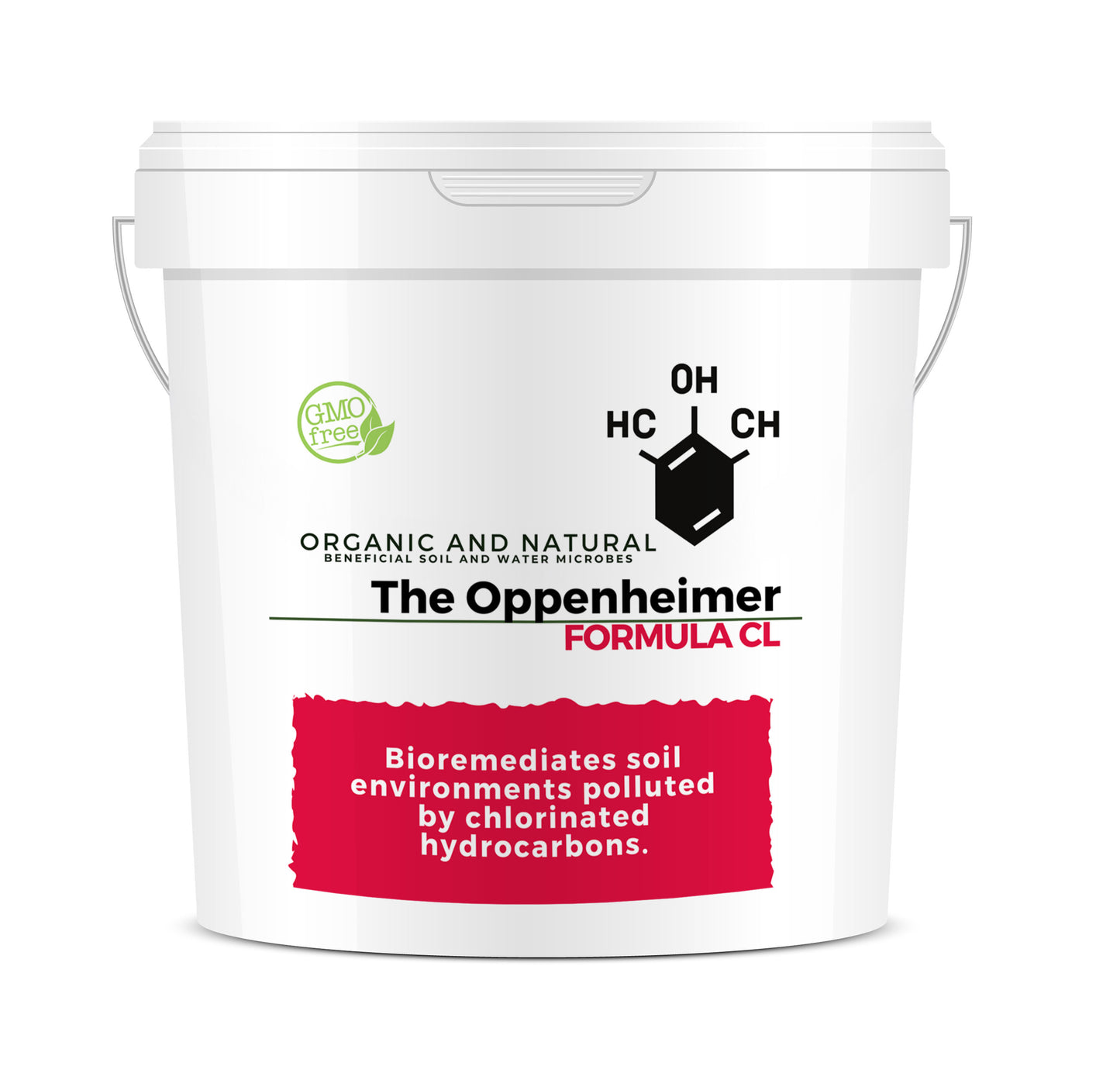
Oppenheimer Formula CL

Degrades chlorinated solvents in soil and water environments.

For use in the biological remediation of chlorinated solvent–impacted environments, The Oppenheimer Formula CL supports the controlled breakdown of compounds such as TCE, PCE, and other chlorinated hydrocarbons in soil and water systems. Designed for complex contamination scenarios, it helps reduce contaminant concentrations while minimizing the formation of harmful intermediate byproducts. Ideal for industrial sites, groundwater remediation, and environments impacted by chlorinated solvents requiring carefully managed biological treatment.


Select your size:
Select your base:

Call For Price

Product Overview

Chlorinated aliphatic hydrocarbons (CAHs), such as tetrachloroethene (PCE) and trichloroethene (TCE), are synthetic chlorine-containing compounds commonly used as solvents and degreasers in various industrial applications. Due to their chemical stability, these compounds resist natural breakdown processes, especially in oxygen-rich (aerobic) environments, leading to their long-term persistence and environmental concerns.

TCE, perchloroethylene (PCE), and trichloroethane (TCA) are the most frequently detected volatile organic chemicals (VOCs) in groundwater in the United States.

The Oppenheimer Formula CL microorganisms provide an effective bioremediation solution by using chlorinated solvents as a food source during metabolism. They gradually break down these contaminants into less chlorinated, less toxic products.

A major advantage of this metabolic process is that it does not produce harmful intermediate byproducts such as vinyl chloride—a toxic compound often generated by other biodegradation pathways.

Because of this unique capability, these microbes offer a safer and more efficient approach to remediating chlorinated solvent pollution. They help reduce contamination without creating secondary toxins, making them valuable tools in environmental cleanup efforts.

Product Characteristics

Physical Form

Brown/Gray Powder

Product Base

Mineral Matrix

Microbial Type

Natural communities of aerobic and microaerophilic microorganisms, including archaea, facultative bacteria and fungi.

Microbial Concentration

High

Optimal Activity Range

Temperature: 32°F–120°F
pH: 5.0–10.0
Salinity: up to 24%

Activation Water Types

Fresh, Salt, Brackish (non-chlorinated recommended)

Shelf Life

5+ Years

PF Certification

Pathogen-Free Certified

Hydrophobic Behavior

Hydrophobic — Prefers to adhere to hydrocarbons

Genetic Status

Non-GMO

Other

Not Freeze Dried. Non-Toxic. Can be safely
used around humans, animals, wildlife, sensitive marshlands.


Product Description

Key Benefits

  • Specialized for chlorinated solvents: Designed to support the biological breakdown of compounds such as TCE, PCE, and other chlorinated hydrocarbons
  • Controlled remediation pathways: Supports stable, managed biological transformation of complex contaminants
  • Minimizes harmful intermediates: Helps reduce the formation of toxic byproducts such as vinyl chloride
  • Effective in soil and groundwater: Suitable for subsurface environments and complex contamination scenarios
  • Supports difficult remediation conditions: Addresses contaminants that resist natural degradation in aerobic environments
  • Non-toxic & environmentally responsible: Non-GMO microbial solution with no harsh chemicals or synthetic additives
  • Supports long-term site management: Works within environmental systems to promote sustained contaminant reduction
  • Backed by microbial science: Uses carefully selected microbial communities adapted for challenging contaminant profiles

How it Works

Oppenheimer Formula CL uses a specialized consortium of microorganisms capable of utilizing chlorinated solvents as a food source during metabolism. These microbes attach to contaminants and initiate controlled biological processes that gradually reduce chlorination levels, transforming compounds such as TCE and PCE into less chlorinated, less toxic forms.

Because chlorinated solvents are chemically stable and often persist in subsurface and groundwater environments, effective remediation requires careful management of site conditions. Formula CL supports these processes by promoting microbial activity under appropriate environmental conditions, including adequate moisture, oxygen, and nutrient availability.

Unlike some degradation pathways that can produce harmful intermediate compounds, Formula CL is designed to support more controlled biological transformation, helping reduce contaminant concentrations while minimizing unintended byproducts.

Through these natural processes, Formula CL provides a science-based approach to addressing complex chlorinated solvent contamination in soil and water systems.

Ideal For

• Chlorinated solvent contamination (TCE, PCE, TCA)
• Groundwater and subsurface remediation projects
• DNAPL-impacted environments and complex plume conditions
• Industrial and manufacturing sites with solvent use or disposal history
• Degreasing and dry-cleaning contamination sites
• Long-term remediation and plume management strategies
• Environmental projects requiring controlled biological treatment approaches

Works On

Chlorinated hydrocarbons:

• Trichloroethylene (TCE)
• Perchloroethylene (PCE / PERC)
• Trichloroethane (TCA)

Chlorinated solvents:

• Industrial degreasers
• Dry-cleaning solvents
• Chlorinated volatile organic compounds (VOCs)

Co-contaminants (when present):

• Mixed hydrocarbon and solvent-impacted environments

Safety & Environmental Compliance

Oppenheimer Formula CL is a non-toxic, non-GMO microbial solution composed of naturally occurring microorganisms. It is pathogen-free and does not meet OSHA criteria for hazardous classification when used as directed.

Designed for responsible environmental application, Formula CL supports biological remediation processes without the use of harsh chemicals or synthetic additives. It can be applied in soil and water environments, including sensitive areas, when appropriate site conditions and application guidelines are followed.

As with all remediation projects involving chlorinated solvents, proper site assessment, monitoring, and environmental management practices are recommended to ensure safe and effective use.

Recommended Application Rates

Environment

Rate

Notes

Soil and Water

6 – 8oz. per cubic yard of contaminated material (27 sq yards)

Specific application details will be provided following a thorough review of site assessments and analytical data.

Important Considerations

⚠ Please read before using product.

Contact with the product is essential; without contact, the microbes will not work.

Heavy metals are not degraded; microbes may chelate them into non-reactive forms.

Chlorine concentrations >0.5 ppm are toxic; keep below 0.2 ppm

Supplemental oxygen and bio-nutrients may be needed, depending on site conditions.


Product Documentation

Download important product documents below. Don't see what you're looking for? Check our Resource Center

Description Download
Oppenheimer Formula CL - Technical Data Sheet Download TDS (PDF)
Oppenheimer Formula CL - Safety Data Sheet Download SDS (PDF)
Oppenheimer Biotechnology - Degradable Compounds List Download (PDF)

Questions about this product?
Don't be a stranger.